The Science Behind Choosing the Right Contract Supplement Manufacturer
Understanding Contract Supplement Manufacturing
The Role of Contract Manufacturers in the Supplement Industry
Contract manufacturers handle production for supplement brands that lack their own facilities. They manage formulation, blending, and packaging under strict protocols drawn from the sciences of nutrition and chemistry. Brands turn to a contract supplement manufacturer to scale operations without investing in equipment or regulatory expertise. These partners produce everything from vitamins to specialized blends while ensuring batch consistency. Their involvement spans raw material sourcing through final labeling, which frees companies to focus on marketing and distribution. Effective collaboration with contract manufacturers demands clear specifications on potency and purity from the outset.
Contract manufacturers operate sophisticated facilities equipped with high-shear mixers, fluid-bed dryers, and automated encapsulation lines that ensure uniform distribution of active ingredients at microgram levels. They adhere to FDA current Good Manufacturing Practices (cGMP) and often hold additional certifications such as ISO 22000 for food safety management. Formulation scientists apply principles of physical chemistry to optimize excipient interactions, preventing issues like ingredient degradation or phase separation during storage. Raw material procurement teams source globally from vetted suppliers, conducting identity verification via Fourier-transform infrared spectroscopy and high-performance liquid chromatography before acceptance. This end-to-end responsibility allows emerging brands to bypass the multimillion-dollar capital outlay required for in-house production while maintaining scientific rigor across every production stage.
Benefits of Partnering with a Contract Supplement Manufacturer
Partnering with a contract supplement manufacturer delivers cost savings through shared infrastructure and bulk purchasing power. Companies avoid capital expenses on specialized machinery while gaining access to experienced formulation teams. Speed to market improves because established producers already navigate compliance hurdles. Inventory flexibility emerges as manufacturers adjust runs based on demand forecasts. Brands also benefit from technical support in stability testing and shelf-life studies rooted in material sciences. This arrangement reduces risk and accelerates growth for emerging supplement lines.
Shared infrastructure can reduce per-unit production costs by 30–50 percent compared with building dedicated facilities. Brands gain immediate access to multidisciplinary teams including pharmacologists, food scientists, and regulatory specialists who accelerate formula optimization. Because contract manufacturers maintain validated processes and pre-approved supplier networks, products can reach retail shelves in 12–18 weeks rather than the 24–36 months required for greenfield operations. Flexible production scheduling supports both small pilot batches of 5,000 units and commercial runs exceeding 500,000 units without long-term capacity commitments. Advanced stability programs employ accelerated ICH storage conditions to generate reliable expiration dating, protecting brands from costly post-market failures.
Key Factors in Selecting a Contract Manufacturer
Selecting the right contract manufacturer requires evaluation of certifications, production capacity, and formulation expertise. Brands examine past projects involving similar products to confirm capability with specific active ingredients. Communication responsiveness and transparency on sourcing practices rank high among decision criteria. Financial stability of the manufacturer ensures uninterrupted supply during peak seasons. Site visits reveal operational cleanliness and adherence to current good manufacturing practices. Ultimately the sciences of process engineering guide choices that protect product integrity and brand reputation.
Technical capability assessments often include review of equipment lists, such as capability for probiotic encapsulation under nitrogen flush or handling of hygroscopic minerals. Financial due diligence examines balance sheets and insurance coverage to confirm resilience against raw-material price volatility. Quality agreements define key performance indicators including on-time delivery rates above 95 percent and deviation investigation turnaround within 10 business days. Process engineering evaluations focus on scale-up protocols that preserve critical quality attributes such as dissolution profiles and particle-size distribution when moving from laboratory to commercial equipment.
Quality Control in Supplement Manufacturing
Importance of Quality Assurance Standards
Quality assurance standards protect consumers from contaminants and inconsistent dosing in supplements. Regulatory frameworks such as USP and NSF set benchmarks that reputable manufacturers follow. These standards demand documented procedures for every production step. Failure to meet them invites recalls and legal exposure. Strong quality controls build consumer trust and differentiate products in a crowded market. Manufacturers integrate these protocols into daily operations to maintain batch-to-batch reliability across global supply chains.
USP <2091> and NSF/ANSI 173 specify limits for microbial counts, heavy metals, and pesticide residues that exceed minimum regulatory thresholds. Documented procedures encompass change-control systems, deviation management, and annual product-quality reviews. Non-compliance can trigger warning letters, product seizures, or civil penalties exceeding several million dollars. Robust quality systems also generate the data required for structure-function claim substantiation and international market registrations.
Common Quality Control Practices
Common quality control practices include raw material identity testing, microbial screening, and heavy metal analysis. In-process checks verify blend uniformity before compression or encapsulation. Finished product testing confirms label claims for vitamins, minerals, and botanicals. Stability chambers simulate storage conditions to predict shelf life accurately. Documentation trails allow traceability from ingredient lot to shipped container. These layered measures reflect applied sciences that safeguard efficacy and safety throughout manufacturing.
Identity testing routinely employs near-infrared spectroscopy for rapid screening followed by compendial wet chemistry confirmation. Microbial limits testing follows USP <61> and <62> protocols, while inductively coupled plasma mass spectrometry detects arsenic, cadmium, lead, and mercury at parts-per-billion sensitivity. Blend uniformity testing uses stratified sampling at 10–20 locations within a blender to calculate relative standard deviation below 5 percent. Real-time release testing via process analytical technology reduces cycle times while maintaining rigorous release criteria.
How to Evaluate a Manufacturer's Quality Control Measures
Evaluating quality control measures starts with reviewing certificates of analysis for recent batches. Brands request audit reports from third-party inspectors and examine deviation logs for recurring issues. On-site assessments observe equipment calibration and personnel training records. Analytical method validation confirms the laboratory detects impurities at required thresholds. Discussions with the quality team reveal how corrective actions prevent future problems. Thorough vetting identifies manufacturers whose controls align with product risk profiles.
Review of CAPA (corrective and preventive action) effectiveness metrics reveals whether root-cause investigations translate into lasting process improvements. Validation packages for analytical methods should demonstrate specificity, accuracy, precision, and robustness per ICH Q2(R1) guidelines. Training matrices document competency assessments for operators performing critical steps such as weighing and visual inspection. Risk-based audit schedules prioritize high-volume or complex products, ensuring controls scale appropriately with manufacturing volume.
Exploring Dosage Forms in Supplement Production
Overview of Popular Dosage Forms: ODT, Effervescent Tablets, and Gel
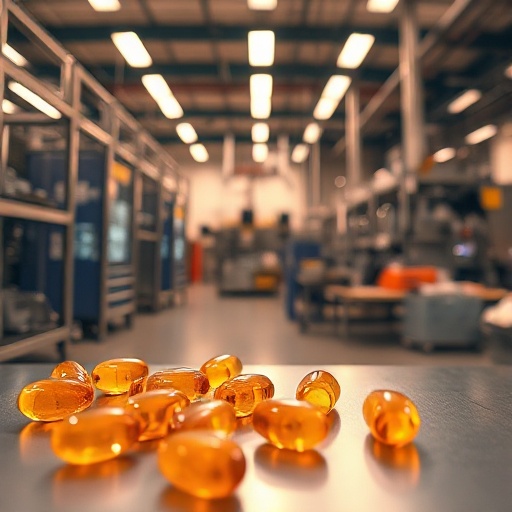
Popular dosage forms include orally disintegrating tablets (ODT) that dissolve rapidly on the tongue without water. Effervescent tablets release active ingredients through a fizzing reaction that aids absorption and palatability. Gel formats, whether soft gelatin capsules or topical applications, deliver oils and fat-soluble nutrients efficiently. Each format presents distinct manufacturing challenges related to stability and excipient compatibility. Contract supplement manufacturer teams optimize these forms using principles from pharmaceutical sciences to meet consumer preferences and therapeutic goals.
ODT formulations rely on superdisintegrants such as crospovidone combined with mannitol or sorbitol to achieve disintegration times under 30 seconds. Effervescent systems utilize citric acid–sodium bicarbonate reactions that generate carbon dioxide, simultaneously creating a pleasant mouthfeel and facilitating rapid dissolution. Soft-gel encapsulation employs rotary-die technology to enclose lipid-based fills, protecting omega-3 fatty acids and carotenoids from oxidation while enabling precise dosing of viscous liquids.
Choosing the Right Dosage Form for Your Product
Choosing the right dosage form depends on the active ingredient's solubility, target demographic, and storage requirements. ODT suits consumers who struggle with swallowing pills. Effervescent tablets appeal to those seeking convenient hydration alongside supplementation. Gel capsules protect sensitive compounds from oxidation while masking unpleasant tastes. Manufacturers assess compatibility during early development to avoid reformulation costs later. The decision influences both production efficiency and market positioning.
Preformulation studies evaluate pH-solubility profiles, hygroscopicity, and photostability to guide excipient selection. Pediatric and geriatric populations often prefer ODT or effervescent formats that reduce pill burden. Lipid-based fills in soft gels improve bioavailability of compounds classified as BCS Class II or IV. Early compatibility screening prevents costly delays when scale-up reveals interactions between active ingredients and capsule shell materials.
The Impact of Dosage Form on Consumer Experience
Dosage form directly shapes consumer experience through ease of use, taste, and perceived effectiveness. ODT products provide discreet intake during travel or work. Effervescent options create an engaging ritual that encourages daily adherence. Gel formats deliver concentrated nutrients in smaller volumes, reducing pill burden. Poorly chosen forms lead to complaints about texture or aftertaste that damage brand loyalty. Successful manufacturers refine these attributes through sensory testing and consumer feedback loops.
Consumer sensory panels quantify bitterness masking, mouthfeel, and aftertaste intensity using hedonic scales. Texture analysis instruments measure tablet hardness and friability to ensure ODT products do not crumble during handling. Preference studies demonstrate that effervescent formats can increase compliance rates by up to 25 percent among users who dislike swallowing tablets. Packaging design further influences experience, with single-serve stick packs for effervescent granules enhancing portability.
Sustainability in Supplement Manufacturing
The Growing Importance of Sustainable Practices
Sustainable practices gain importance as buyers demand environmentally responsible sourcing and production. Manufacturers reduce plastic packaging and shift to renewable energy sources in facilities. Water recycling systems and solvent recovery lower the environmental footprint of extraction processes. Certifications such as organic and fair trade further signal commitment. These efforts align with broader sciences of ecology and resource management that influence long-term industry viability.
Life-cycle assessments quantify impacts from farm to finished bottle, guiding decisions such as switching to post-consumer recycled PET or aluminum blister foils. On-site solar arrays and purchased renewable energy certificates can reduce Scope 2 emissions by 60–80 percent. Closed-loop water systems employing reverse osmosis and ultrafiltration recycle up to 90 percent of process water used in botanical extraction.
How to Assess a Manufacturer's Sustainability Efforts
Assessing sustainability efforts involves reviewing waste diversion rates and carbon accounting reports. Brands inquire about renewable material usage in bottles and labels. Traceability systems confirm responsible farming practices for botanicals. Energy efficiency audits highlight reductions in greenhouse gas emissions. Discussions with procurement teams uncover initiatives like biodegradable blister packs. Transparent manufacturers share progress metrics openly rather than vague commitments.
Third-party verifications such as GRI Standards reporting or Science Based Targets initiative participation provide quantifiable benchmarks. Blockchain-enabled traceability platforms allow brands to verify that botanical ingredients originate from regenerative agricultural plots. Annual sustainability scorecards track metrics including landfill diversion above 95 percent and year-over-year reductions in water intensity per kilogram produced.
Innovations in Eco-Friendly Supplement Manufacturing
Innovations in eco-friendly manufacturing include algae-based capsule shells and plant-derived coatings that replace synthetic alternatives. Closed-loop systems recapture heat from drying processes to cut energy consumption. Precision fermentation produces certain nutrients with minimal land use. 3D printing of tablets reduces material waste during small-batch runs. Forward-thinking contract supplement manufacturer operations adopt these advances to meet regulatory pressures and consumer expectations simultaneously.
Algae-derived pullulan capsules offer moisture protection comparable to gelatin while eliminating animal-derived components. Precision fermentation using engineered microbes yields vitamin B12 and omega-3 DHA at yields exceeding traditional extraction methods, dramatically lowering land and water requirements. Additive manufacturing techniques enable on-demand production of personalized dosage forms, reducing inventory waste and overproduction common in conventional tableting operations.
Managing Inventory and Supply Chain in Supplement Manufacturing
Best Practices for Inventory Management
Best practices for inventory management include real-time tracking systems that monitor raw material levels and finished goods. Safety stock calculations account for seasonal demand spikes in immune or sports supplements. ABC analysis prioritizes high-value ingredients for tighter control. Regular cycle counts detect discrepancies before they disrupt production. Integrated software links inventory data with sales forecasts to maintain optimal stock without excess capital tied up in storage.
Enterprise resource planning platforms integrate point-of-sale data with manufacturing schedules to generate dynamic reorder points. Safety-stock models incorporate lead-time variability and demand forecast error using statistical service-level targets of 97–99 percent. Cycle-count programs employing ABC classification focus 80 percent of audit effort on the 20 percent of SKUs representing highest value or velocity, minimizing stock discrepancies to under 0.5 percent.
Understanding Lead Times and Production Schedules
Lead times in supplement manufacturing span ingredient procurement, quality testing, and production runs. Complex formulas with imported botanicals often require longer schedules than simple vitamin blends. Production calendars reserve capacity for rush orders while protecting standing commitments. Weather events or regulatory inspections can extend timelines unexpectedly. Clear communication with the contract manufacturer allows brands to plan launches around realistic availability dates and avoid stockouts.
Botanical extracts sourced from remote regions may require 16–24 weeks from purchase order to release due to multi-stage testing and ocean freight. Capacity reservation agreements guarantee weekly production slots during peak seasons. Scenario planning incorporates buffer days for potential port delays or audit findings, enabling brands to set realistic retail availability dates and coordinate marketing campaigns accordingly.
Collaborating with Manufacturers for Efficient Supply Chain Management
Collaborating with manufacturers for efficient supply chain management requires shared demand planning and joint forecasting sessions. Vendors provide visibility into upstream ingredient availability that affects overall timelines. Coordinated logistics reduce transit times and freight costs through consolidated shipments. Contingency agreements outline backup suppliers for critical components. These partnerships leverage data analytics to balance inventory turns with service levels across the entire supplement distribution network.
Monthly sales-and-operations-planning meetings align brand forecasts with manufacturer capacity models, enabling proactive raw-material purchases. Vendor-managed inventory programs for high-volume excipients reduce brand working capital while ensuring continuous supply. Dual-sourcing strategies for key botanicals mitigate geopolitical or climate-related disruptions. Advanced analytics platforms generate scenario simulations that optimize total landed cost versus service-level trade-offs across multi-tier supply networks.
See Also
- Sustainable Practices in Contract Supplement Manufacturing You Should Know
- How Quality Controls Shape the Future of Contract Supplement Manufacturing
- Future Trends in Contract Supplement Manufacturing You Can't Afford to Miss
- The Rise of ODT and Effervescent Tablets in Contract Supplement Manufacturing
- Gel Supplements and the Role of Contract Manufacturers in Their Production